Introduction to cybersecurity workflow checklist in Cybersecurity
This article explains how to plan, implement, and measure cybersecurity workflow checklist specifically for the Cybersecurity category. It focuses on practical steps, recommended tools, and common pitfalls so you can execute with confidence and minimal rework.
If you need a quick roadmap, the sections below break the process into clear phases: strategy, setup, execution, testing, and measurement. Each section includes actionable items you can apply immediately.
Define clear objectives and scope
Start by defining measurable objectives that align with your overarching goals in the Cybersecurity category. Objectives should be time bound and specific so you can evaluate success without ambiguity.

Example objectives include increasing a key metric by a percentage, reducing a processing time, or launching a feature with defined acceptance criteria. Record scope boundaries to avoid scope creep during implementation.
Assemble the right toolkit
Choose tools that match the complexity and scale of your cybersecurity workflow checklist needs in Cybersecurity. Select solutions that integrate well with your existing stack and that your team can support long term.
Recommended categories of tools to evaluate include analytics, automation, testing, and project tracking. Prioritize tools with clear documentation and active communities to shorten onboarding time.
- Analytics platforms for measurement and reporting
- Automation tools for repetitive tasks and deployments
- Testing frameworks for validation and quality assurance
Design a practical workflow
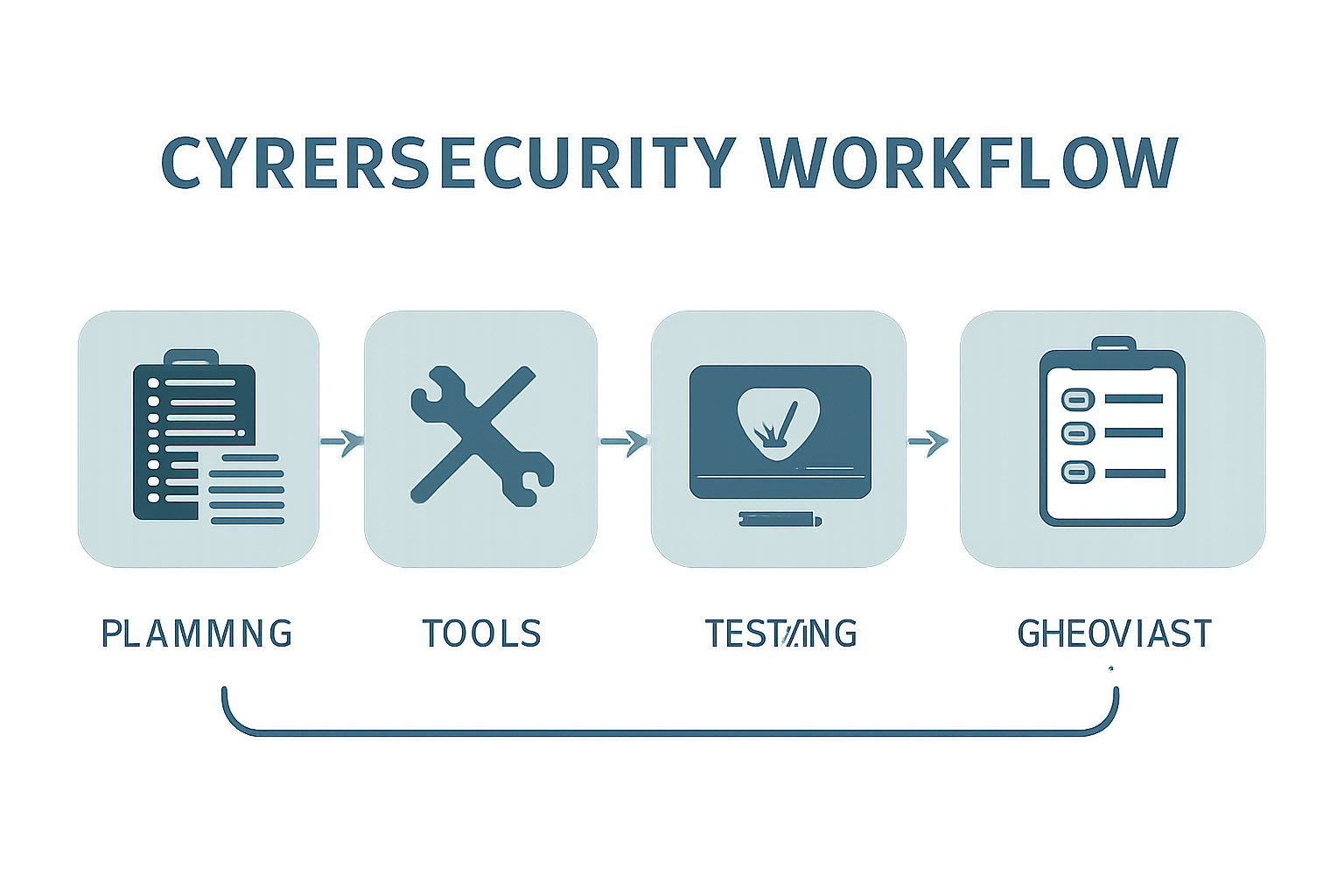
Create a repeatable workflow that moves from planning to deployment, and that includes checkpoints for review and testing. Map out responsibilities so each team member knows deliverables and deadlines.
Document handoffs between phases and include acceptance criteria for every milestone. This reduces rework and helps maintain consistent quality throughout the initiative.
Implementation steps and best practices
Break implementation into smaller sprints or tasks, each with a clear owner and success metrics. Use version control and a staging environment to validate changes before they go live.
Adopt these best practices during implementation to reduce risk and increase speed to value.
- Start with a minimal viable deliverable to gather feedback quickly
- Use automated testing to catch regressions early
- Maintain a changelog so stakeholders can track progress
Testing and quality assurance
Testing should be integrated into the workflow rather than an afterthought. Define test plans that cover functional, performance, and edge case scenarios relevant to Cybersecurity.
Include both automated and manual testing. Automated tests validate core paths, while manual checks help uncover usability and real-world integration issues.
Measure outcomes and iterate
Identify key performance indicators tied to your initial objectives. Track these KPIs consistently and report on them at predefined intervals so stakeholders can see progress and decide on next steps.
Use the following approach to iterate: review data, prioritize improvements, implement changes, then measure impact. Small, frequent iterations usually outperform large, infrequent releases.
Common pitfalls and how to avoid them
Several recurring issues can derail cybersecurity workflow checklist projects in Cybersecurity. Recognize these early and have mitigation strategies ready.
Typical problems include unclear requirements, insufficient testing, and tool mismatches. Prevent these by setting clear requirements, dedicating time for QA, and piloting tools on a small scale first.
- Unclear scope: lock down acceptance criteria before building
- Poor integration: test interfaces early to avoid surprises
Checklist for launch readiness
Before you launch, run through a concise checklist to confirm the project is production ready. The checklist should cover functionality, performance, security, and documentation.
Share the checklist with stakeholders and assign final sign-offs so accountability is clear at launch time. Keep the checklist lightweight and focused on must-have items.
- All critical tests passed in staging
- Monitoring and rollback procedures in place
- Documentation and team handover complete
FAQ
What is the first step when starting cybersecurity workflow checklist?
Define the objective and scope. Identify one measurable outcome to focus on, then align stakeholders on timeline and acceptance criteria.
How do I choose the right tools for Cybersecurity work?
Evaluate tools based on integration capability, ease of use, community support, and cost. Pilot promising options on a small project before committing.
How long should testing take before launch?
Testing duration varies by complexity, but allocate enough time to cover core functionality, performance benchmarks, and integration points. Prioritize high-risk areas first.
How can I measure success after launch?
Track the KPIs defined during planning. Use baseline data collected before changes, then compare post-launch metrics at regular intervals to judge impact.
Conclusion
Executing cybersecurity workflow checklist in the Cybersecurity category requires a clear plan, the right tools, and a disciplined workflow. Start with specific, measurable objectives and design a workflow that supports repeatable delivery and reliable testing.
Use small iterations to gather feedback quickly, and automate tests to reduce manual overhead. A short launch checklist and well defined monitoring help ensure stability after deployment. Avoid common pitfalls by locking down requirements early and piloting tools at small scale before rolling them out widely.
By following the practical steps outlined above you can reduce risk, improve team alignment, and accelerate results. Keep measurement at the center of your process so every change can be evaluated, refined, and scaled with confidence.